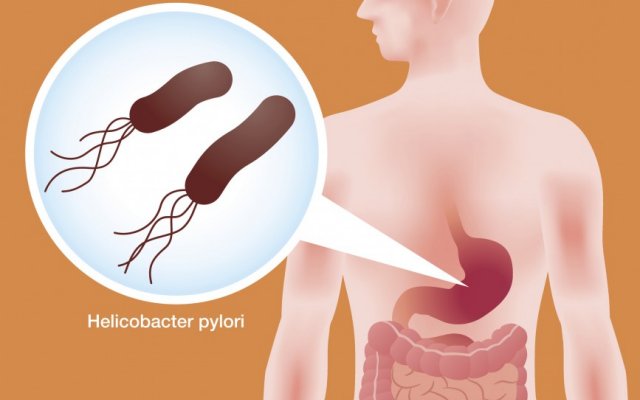
Helicobacter pylori. Behind this unusual name lies a bacterium that colonizes the gastric mucosa. Its ability to withstand extreme acidic conditions allows it to thrive within this organ. If the name doesn't ring a bell, Helicobacter pylori infection is nonetheless widespread globally: it colonizes the stomachs of half the world's population. In France alone, its prevalence is between 15 and 30%, although the frequency varies according to age group.
Infection is most likely during childhood, primarily in the first five years, due to poor hygiene or close contact with others. Direct contact with stomach secretions, such as regurgitation or vomiting, is a major contributing factor. Saliva is another possible source of infection, which is why children who frequently put objects in their mouths can become infected through contact with other children, for example, within the same family or daycare. However, since Helicobacter pylori only develops in the stomach, this bacterium is much less easily transmitted than others.
It should be noted that the risk of infection in adulthood is very low, although standard hygiene measures, particularly washing hands before cooking and eating, remain essential. The vast majority of people infected with Helicobacter pylori are asymptomatic and will therefore not develop any health problems. However, although silent, the infection can lead to gastritis, a chronic inflammation of the stomach lining that persists for life if left untreated. Most often without specific symptoms, it can sometimes cause digestive discomfort and pain, signs that should be taken seriously.
As health authorities warn, Helicobacter pylori infection can progress from gastritis to more serious conditions that may appear years later. These include ulcers, which are more or less deep sores in the stomach lining, and stomach cancer. Eliminating the bacteria helps clear up the inflammation of the stomach lining, and with it, the ulcers and other digestive problems. Infected individuals are treated with antibiotics, along with medication to reduce stomach acid.
This treatment, lasting 7 to 14 days, cures the infection in 80 to 90% of cases.
 Alexandra BRESSON Alexandra BRESSON
|
 26/11/2022 |




































 Anglais
 Arabic
 Deutsch
 Français
 Español
 Italien
 Português
 Russian